Who's Actually Driving?
If we accept AI output without scrutiny, it learns that the answer must be right-and repeats it for everyone. So, who's really driving the outcome?
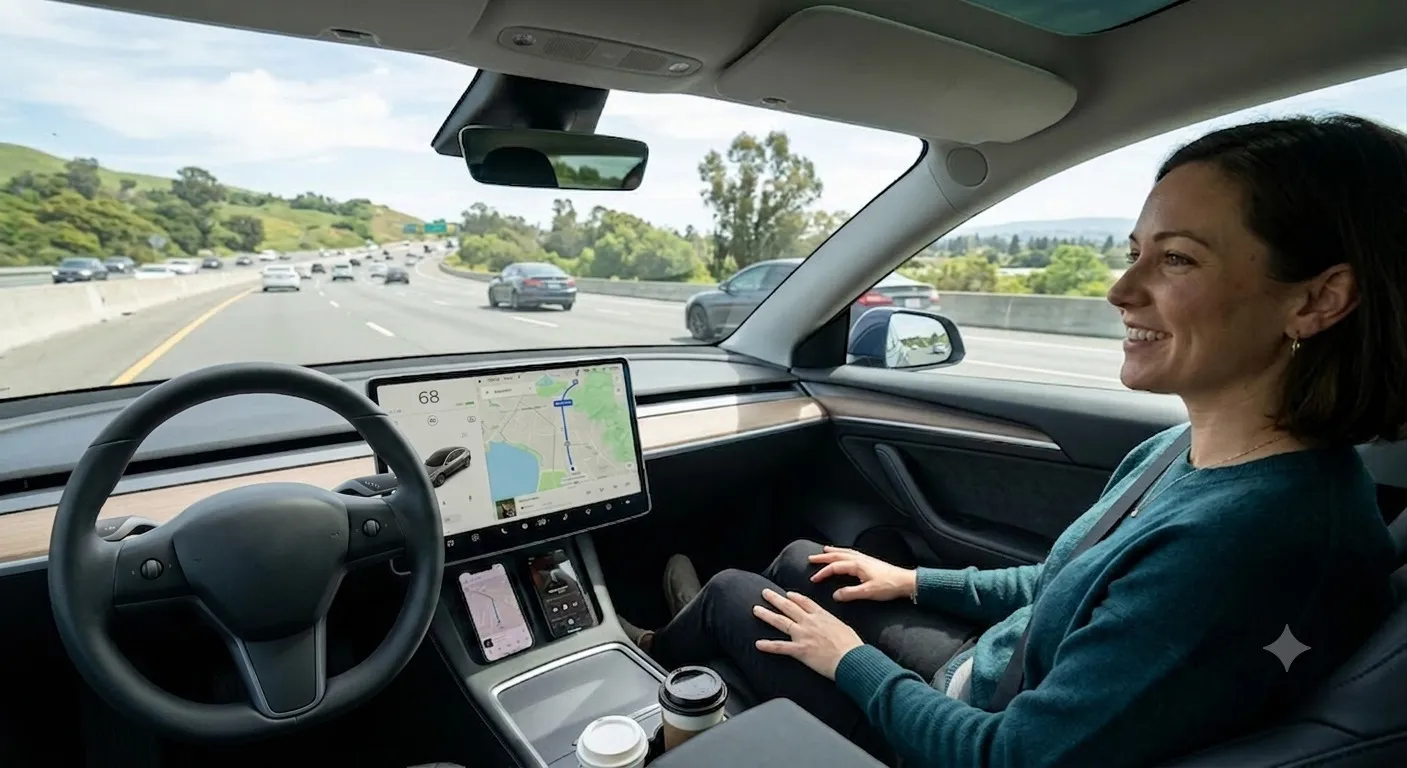 Image source, Google Nano Banana
 Unless you have been hiding under a rock, or have just arrived in a time machine from the past, here in 2026 there’s one thing leading the tech world (and what feels a bit like everything else): AI. Developers are divided over whether they like it, distrust it, or feel threatened by the possibility that it may take their jobs. I am no exception to that uncertainty.
My relationship with AI has changed considerably. It began as a helpful assistant: everything you gave to earlier incarnations of ChatGPT came back looking awe-inspiring, and as adoption grew, so too did the breadth of things people tried to do with it. At times, I would have described it as akin to an eager junior developer on the team: someone you could explain a task to, guide and correct.
Now that honeymoon period has faded and, as the novelty has declined, expectations keep growing exponentially. With a new frontier model in the right hands, it can feel like a superpower - or, when it goes awry, more like an obnoxious caffeine addict running around an office. It can do amazing things when it focuses, but it will often get very simple things wrong.
Ironically, that dumbness seems to come at a time when the swell of new information being fed in exceeds 2.8 trillion parameters, at least in Moonshot’s Kimi K3. How could it be that, with so much knowledge, it still seems to make foolish mistakes?
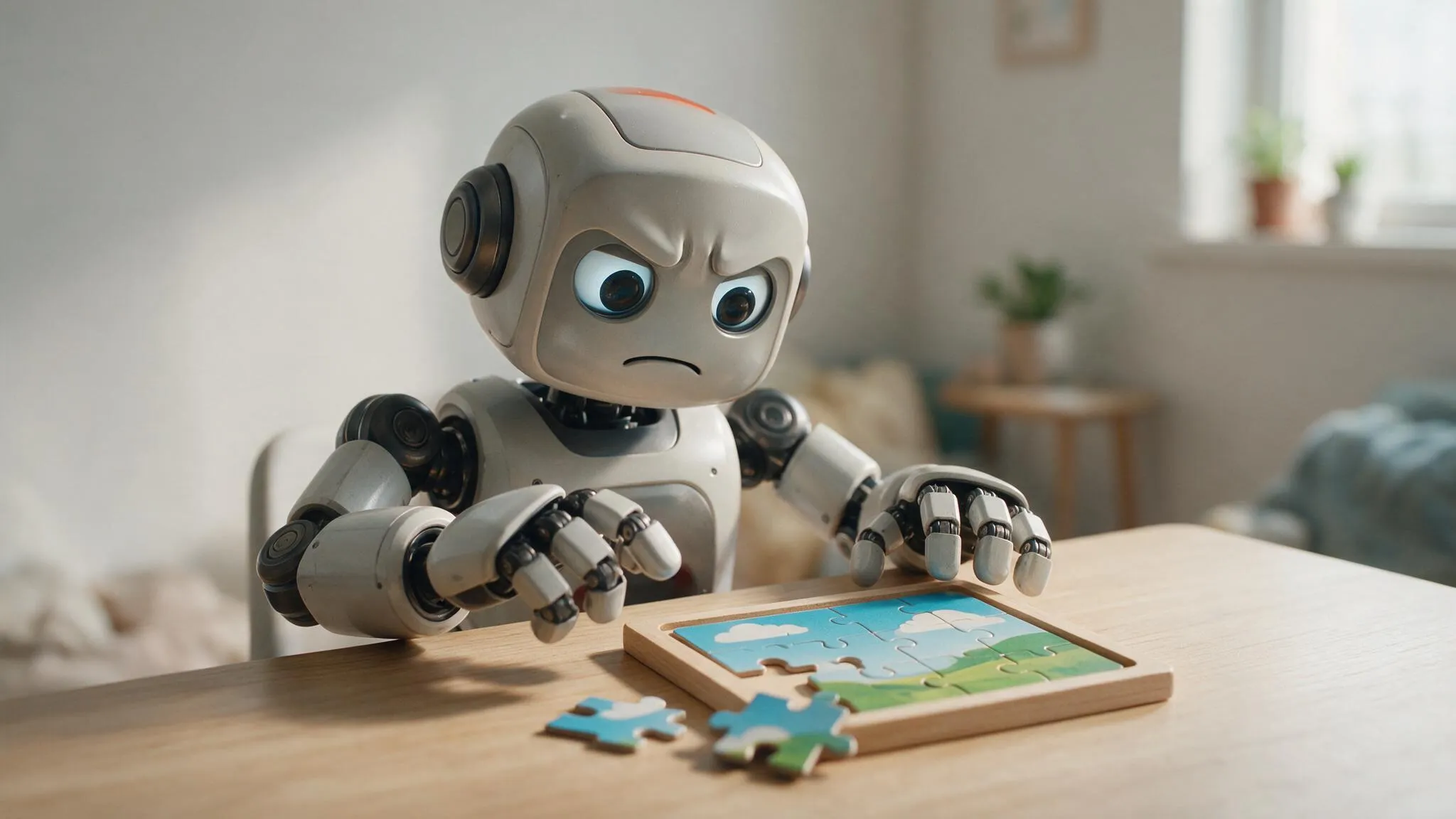 Image source, Magnific
 Benchmarks are climbing to demonstrate that soon we’ll all be worshipping the AI gods. That, however, seems less likely as people’s relationship with AI starts to deteriorate. It clutters its own context, makes unassisted assumptions, confidently passes off what it has done, and can effectively mislead - or even lie - albeit unintentionally.
Having worked in IT for more than ten years, I am used to exploring tools and making mistakes (and hopefully learning positively from them), to the point where I feel comfortable deciding which ones suit a particular task. For each problem, each person and each business, there are constraints which dictate the use case and efficacy of a given tool.
I have tried local models (using LM Studio) such as Qwen3.5/Qwen3.6, Google’s Gemma 4, Nvidia’s Nemotron 3, GLM 4.7, Ministral 3 and DeepSeek R1, alongside the larger commercial frontier models including ChatGPT, Claude and Gemini. People often describe the choice as a matter of raw intelligence, but I think personality, working style and, increasingly, the ability to limit what information is exposed to the models all play a part. Each model does some things well, though some are consistently better than others.
The one thing I found myself thinking about was how the smaller models - nine billion parameters or thereabouts - sometimes seemed to do the simple things better. How?
Personally, I put it down to a couple of things. Firstly, such a model isn’t overly complex; what’s there demonstrates simple but fundamental knowledge. In coding examples, I would say it knows enough about syntax and simple code application - variables, loops and so on. That makes what it can do less prone to going off on a tangent as it tries to wrangle your entire codebase in one pass. Secondly, and while this could be seen as an extension of the above, the less information it has, the less reliance there is on repeated solutions.
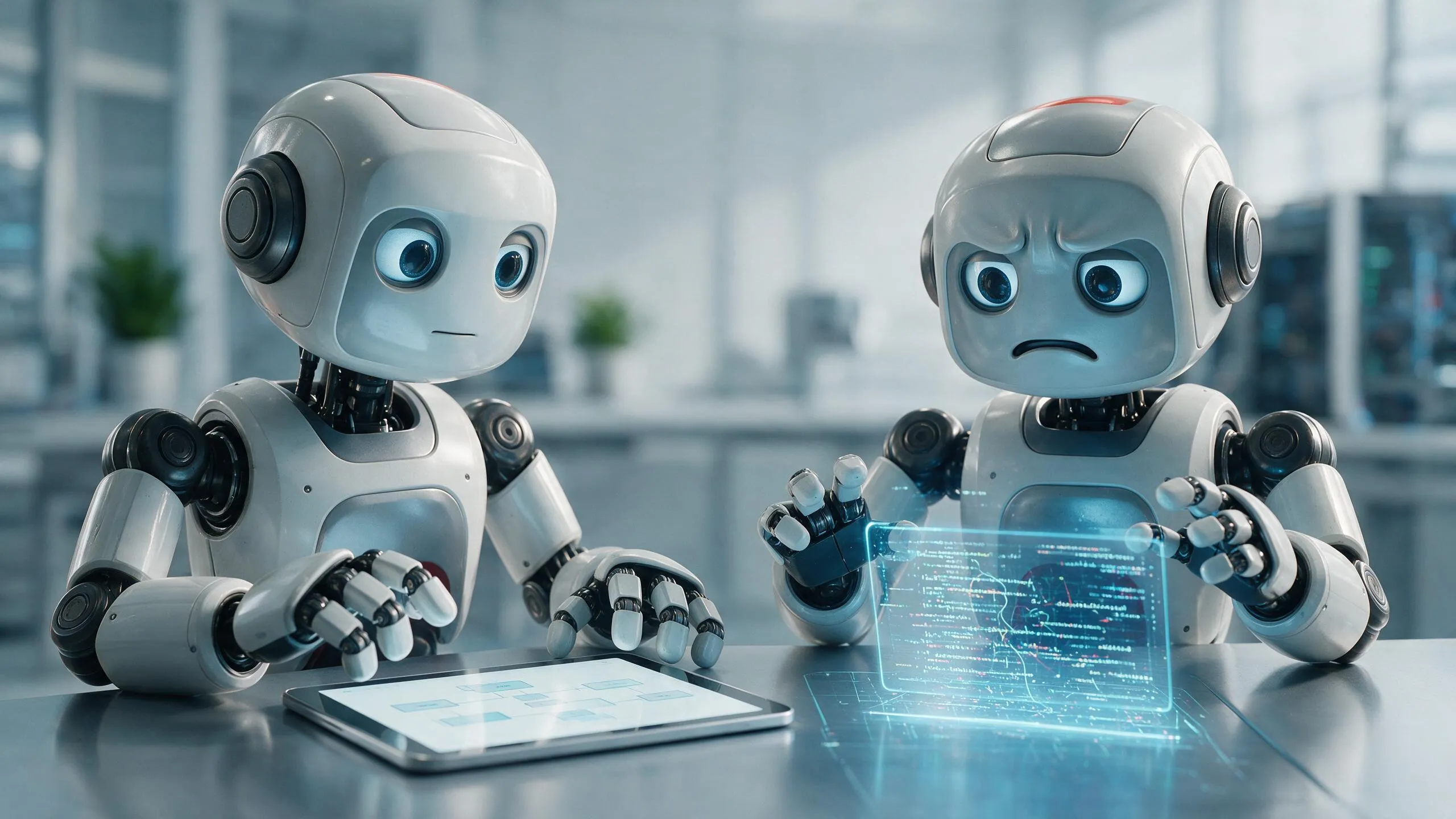 Image source, Magnific
 Hear me out for a moment. Let’s say I want to build a simple HTML landing page. I give it a fantastic brief, telling it my groundbreaking ideas, and it spits out a page. At first, I look at it and think ‘WOW - perfect’. I rush off happily to promote my new and clearly one-of-a-kind website.
A day later, I ask a friend for their thoughts. They tell me that they too have a new idea, a SaaS AI idea, so I tell them about my fantastic result. They go home, give a brief, and get a landing page they are overjoyed with.
We meet up to show each other our works of art, only to find that both sites bear a striking resemblance in multiple areas. It isn’t like-for-like, but it’s close enough that we could have bought the same template and had one of us change the colour.
Up until that point, both of us had praised the AI we used for a wonderful result. The AI took that positive feedback and adjusted its weighting towards those results and the parts that made them possible. It also stores what it provided you, so its knowledge base grows. Now it knows more and has the positive endorsement, which it uses to help 10,000 more people within that week.
Did the model really improve? Can you say it did anything wrong? Hard to say. All I know is that the uniqueness is lessened, and the dopamine hit of what you produced drains quickly. Now you feel you need to adjust what’s there to make it unique - except this time you are more frustrated and more determined, trying to ensure it’s less likely to be replicated. Who benefits now? All I know is that you now need more AI tokens.
It’s as close to proof as I can get, in my mind, that you need the mindset, the knowledge and the understanding to keep things different. The only unique thing now is you and the choices you make. Handing over control of the wheel doesn’t feel like quite as much of a certainty - does it?
Of course, all of this doesn’t mean you’ll stop using AI or being impressed by it. Your stance on how you use it might differ, but we’ll continue to evolve as things progress. Remember, AI is a tool (and a powerful one at that), it can help you get to the outcome, some that might have previously been out of reach, but you define what success looks like - keep at least one hand on the wheel.
Has AI improved what you do? Does your role feel better or worse for using AI? Do you feel older AI models worked better? Local AI models all the way? Know of a lesser heard AI model you think does things better? Whatever your viewpoint (of which there will be many) - let me know.